AI-powered tariff plan management platform

Microsoft .Net Kubernetes Azure SQL Power Bi
FinTech FinTech

A telecommunications company needed to modernize how tariff plans are designed, evaluated, and updated. The goal was to predict key tariff events and outcomes using historical data and customer attributes, account for seasonality, and enable data-driven creation of new plans that work for both customers and the business.

hero image

Service

Custom Software Development

Testing & QA

UX/UI Design

Challenge

Tariff plans in telecom behave differently in production: seasonality, weekends and holidays shift usage, and the same pricing logic performs unevenly across segments and regions. The client couldn’t reliably predict which plans would underperform, which changes would improve revenue, or how a new tariff would behave before launch.

Data structure was also an issue. Key signals were fractured across systems, duplicated, and aggregated in ways that weren’t ML-ready. The client needed a model that could learn from multi-terabyte datasets, trace predictions back to clear attributes, and return results fast enough to support real tariff planning.

Our Solution

We delivered a four-stage ML pipeline designed for tariff plan forecasting and decision support. The platform combined structured data engineering with multiple algorithms so the model could predict outcomes, segment customers, and explain drivers behind recommendations.

The client moved from slow, retrospective tariff analysis to operational forecasting that works at telecom scale. The model was trained on up to 10 TB of historical data and supported repeated forecasting cycles processing around 1 TB per regression run, enabling teams to refresh predictions as market conditions and customer behavior changed.

Multi-stage modeling pipeline for tariff forecasting

The solution combines several algorithms in one structured flow: regression for forecasting key tariff values, classification to organize and validate attribute relationships, clustering to segment customers and tariff plans, and time-series analysis to capture seasonal patterns. This setup makes predictions more stable than a single-model approach because each stage adds a specific layer of signal.

Attribute-based data model

Raw telecom and billing data was decomposed into meaningful attributes and organized into a clear hierarchy of entities. These layers include controlled CRUD versioning, so changes in tariff definitions or attribute logic do not break comparability across model runs.

Scalable ETL and governed data gateways

The data pipeline was designed to normalize data from multiple sources through ETL gateways. The team prepared datasets in a consistent predictive structure suitable for repeated training and evaluation cycles, handling large volumes of data, up to one terabyte processed per regression cycle, and training scope reaching up to ten terabytes.

Low-latency prediction access with parallel retrieval and time-based caching

To support operational decision-making, the platform optimizes retrieval using parallel processes for in-memory access and database access. Frequently requested data is served from RAM for the fastest response, while structured data reads from the database are optimized for predictable performance.

Features

Predictive view of tariff performance and risk

Pricing and product teams can forecast outcomes such as expected revenue potential, cost drivers, and underperforming plans using historical behavior and attribute-based inputs. This reduces reliance on retrospective reporting and supports proactive decisions on which plans to improve, retire, or redesign.

Segmentation for tariff strategy

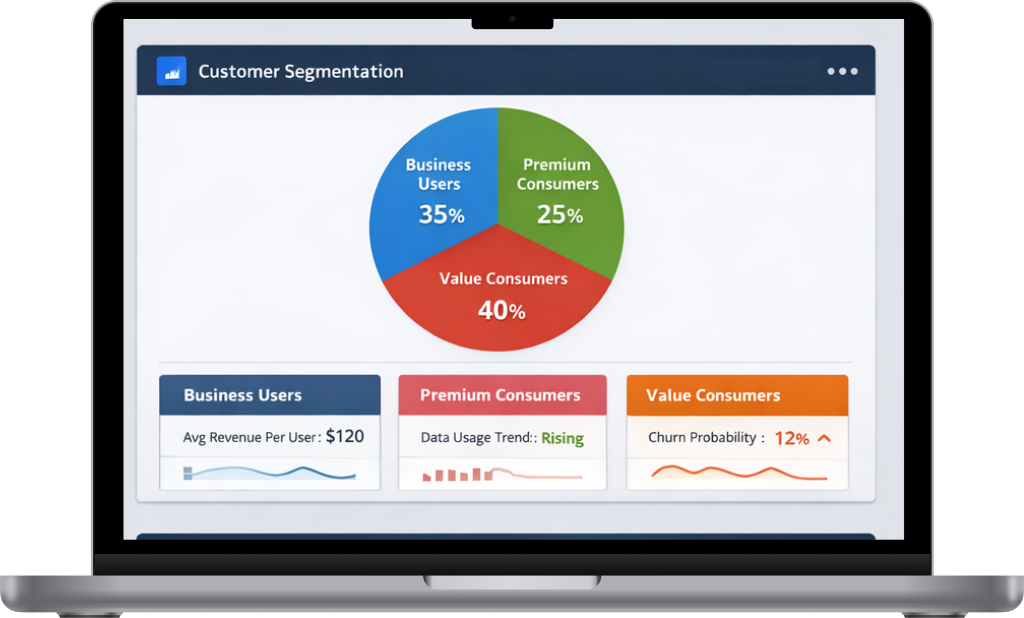
The platform clusters customers and tariff plans into meaningful groups, making it possible to model tariff behavior differently for business customers and consumer customers, as well as for regional or usage-based clusters. This helps teams design tariffs that match the realities of each segment instead of averaging all behavior into one generalized plan.

Seasonality-aware forecasting

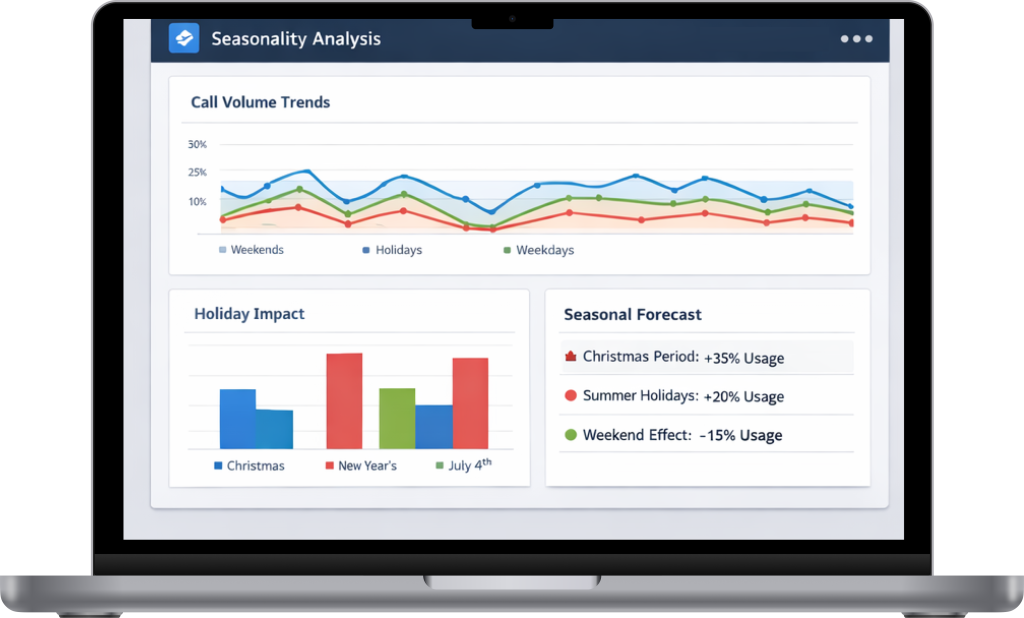
The model accounts for time-driven patterns that significantly affect telecom usage, including weekends, public holidays, and recurring seasonal shifts. By representing calendar events as structured attributes, forecasts become more accurate and practical for planning pricing changes around expected demand spikes or drops.

Power BI reporting

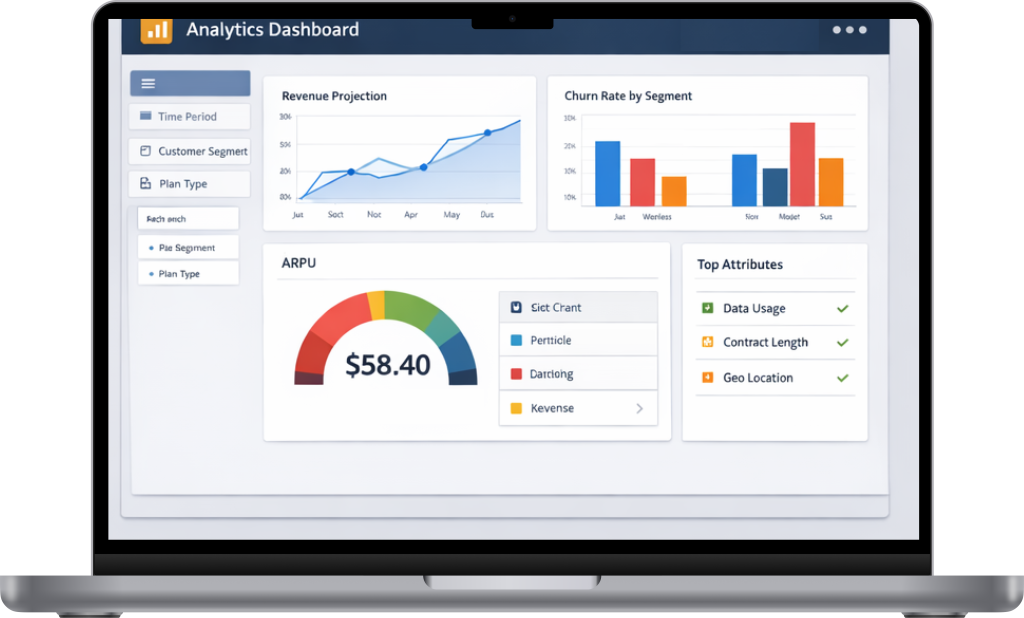
The solution includes reporting that helps stakeholders explore predictions and understand the drivers behind them. Users can apply filters and drill down through layers of insight to move from high-level trends to segment-level patterns and attribute-level explanations.